- Home
- Blogs
- Indian Groceries Online Shopping Guide
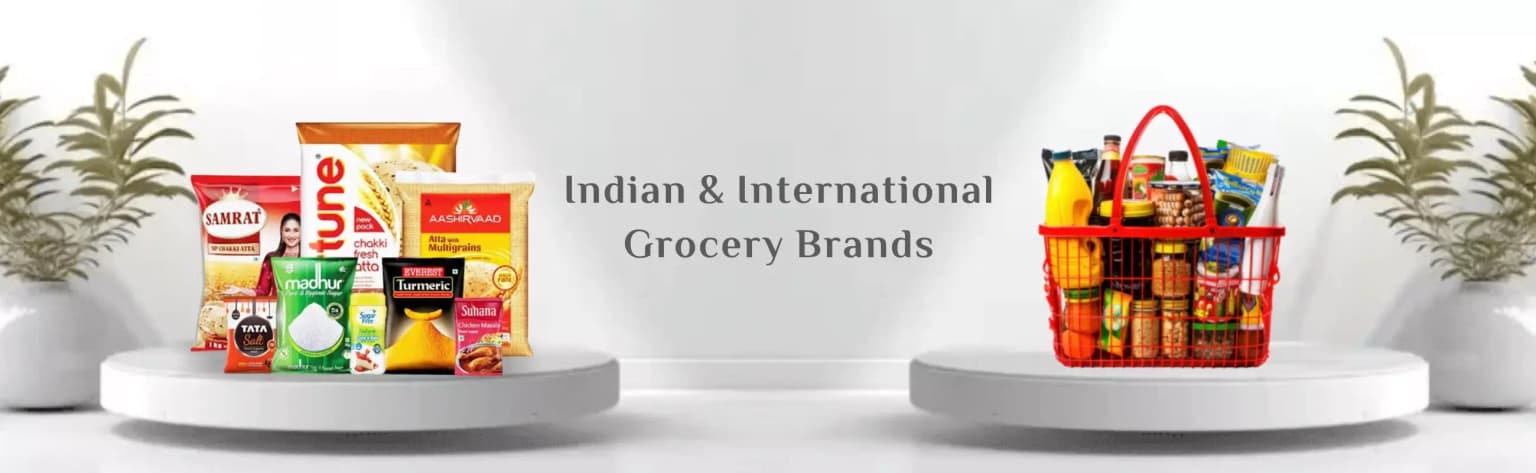
Difference Between Indian & International Grocery Brands
The development of online Indian grocery shopping platforms has made grocery shopping in Indian stores easier, as online stores have become accessible. Even if you are just shopping for the essentials, it makes a difference if you are driving to the Indian supermarket to see if you can find new items. In this post, there is a keen focus on the grocery brands available in Indian stores and the supermarket brands available in other countries. Focus on the availability of products, their price and quality, and the distribution of brands.
What is the chain of thought while shopping for groceries? And how do they jot down the one for them?
What do the local folks prefer? Is it their regional favourites or Imported higher end international brands? Let's find out.
Everyday Staples: The Rise of Indian Grocery Brands
For many years, Indian consumers have relied on Indian brands for their grocery needs. Grocery brands like Amul and Parle-G have established a foothold in most grocery stores. Services like Blinkit and BigBasket have only further solidified their foothold. On the other hand, the closest competitors Indian consumers have globally are well-established grocery brands like Nestle and Kellogg’s, which are primarily focused on offering premium products and instilling a sense of aspiration for the consumer. This established Parle and Amul’s dominance. These products offered a higher volume, lower price, and higher demand for the store patrons.
The anchor was the price points offered by Indian brands, which helped them capture a huge chunk of the market. The grocery market in India is primarily focused on individualised regions, but Indian supermarket chains have begun expanding their offerings to include items like millets and masalas sourced directly from local farmers. This trend also continues in their online offerings, where customers can purchase millets and masalas directly sourced from farmers.
Urban Indian millennials prefer shopping at international supermarket chains, showing a tendency to avoid Indian supermarket chains. Indian supermarkets' private label brands are cheaper. However, Western brands like Nestlé and Kellogg's offer novelty, which increases consumer preference.
Quality and Innovation: Perception Meets Reality
One example of how quality and perception function together is the association of grocery brands and products with quality. Grocery quality perception is also the focus of much controversy in brand comparison. International market brands go to great lengths to imitate products. On the contrary, Indian brands serve the market with authenticity, such as Dabur herbal jams, Britannia herbal jams and attas. Indian brands also tend to win the market with loyalty and repeat online grocery purchases, with international brands falling behind with promotional campaigns aimed to entice trial purchases. This balance of trust and innovation is the enduring quality of contemporary grocery shopping.
Indian grocery brands know how important staples are and how valuable they are in the Indian grocery shopping experience. Indian supermarkets have MDH spices and Amul’s ghee. Indian and international brands are offering more and more. Indian online grocery portals offer customers great convenience with groceries every week.
However, international brands such as Bob’s Red Mill and health-focused imports like gluten-free pasta also cater to the new wellness trend that was absent in traditional Indian stores, providing great convenience as well. There is great convenience in the divide whereby Indian grocery brands cater to the core staples while international brands cater to the more aspirational options.
Kirana vs E-Commerce
Indian Grocery Brands and International Grocery Brands differ in how far they can reach. Indian Supermarket Networks have built reliable systems around kirana partnerships that give them access to every part of Rural India. Supermarket Chains such as ICT and HUL provide a full spectrum of retailer coverage for fast-moving consumer goods (FMCG), and in doing so, they provide a complete Indian Grocery Shopping experience.
International Grocery Brands rely on the e-commerce behemoth Amazon to meet the promises of Global Grocery Delivery, supplemented by partnerships with quick commerce to streamline delivery in urban areas. Therefore, in the Grocery Brands competition, Local Brands win in reach, and International Brands win in speed for the delivery of online grocery shopping in metro areas in India.
The practice of sustainability and additive-free food is no longer a trend; it is an important factor in a huge checklist. Consumers now demand health-conscious foods without any chemicals, and that is where Indian brands fall behind. International brands offer higher-quality products and an aspirational feel that Indian brands fail to deliver.
Consumer Loyalty and Market Trends
Indian runs of grocery shops are nostalgically and sentimentally brand loyal. Generations of families have ‘woven’ brand loyalty into nostalgic runs of grocery shopping stores. Loyalty programs that are point giving, e.g., Systems, incentivise patrons to buy in bulk. Reliance Retail (the brand juggernaut), Reliance Grocery (the brand), and the pandemic together in partnerships, and impinged Indian supermarket brand loyalty in pre-processed foods ‘store’ groceries, and pantry ‘store’ staples. Retail agility assimilation, compliance with quick commerce, and online grocery shopping (especially among adolescents) trends are renewed in Indian grocery retailers.
Obstacles and Expectations
There are obstacles for both Indian and International trade, particularly in the grocery sector. The FSSAI mandates and inline supermarkets merging tag regulatory compliance at the local level. Simple grocery shopping means outlining the dominant local grocery retailers in the Indian Supermarket. Grocery shopping superstores remediate the integrations, updates and tag closures.
Cultural adaptation demonstrates how successful pipelines benchmark brands. Global Grocery powers like Pepsi adapt to local preferences (e.g, masala flavours) and gain entry in the Indian market. Indian brands like Haldiram’s are quintessential examples of reverse adaptation in the globalisation of grocery supply. Online grocery India exemplifies reverse adaptation for the Indian diaspora by stocking hybrid inventories.
Health migration shows contrasts. Indian products like millets, grains, and herbs exemplify holistic health trends with grocery shopping near me queries. Global brands add lines like keto in grocery shopping in India. The fusion of grocery shop migration is exemplified in moringa energy bars.
E-commerce disruption illustrates grocery brands' best of the best. Online grocery shopping leaves Indian grocery store visits in the dust. Indian brands iterate online grocery shopping on Indian for search engine optimisation. Global brands use influencer marketing, and grocery stores buzz.
In a Nutshell
There are two sides to every coin, and the case of application is irrefutable even when it comes to Indian Brands vs International Brands. Both havings its own set of pros and cons, at the end, it all boils down to consumer preference. People who like aspirational and status symbolic things or want a quick taste of a foreign nation might prefer International brands, whereas people who enjoy interactive and traditional foods and groceries might tend more towards Indian brands.
Indian grocery brands have nailed down the price points and a robust supply chain to ensure the availability of their products throughout the country, making them a household name, whereas International brands have understood the aspirational value they possess and have learnt to capitalise on it, which helps them have higher profit margins.
Then some people like a taste of both worlds, and for them, OLRAA caters, offering both International and Indian brands with an extensive collection, which makes you wonder what you were after initially.
So why wait? Shop now on OLRAA to get the best of both worlds, delivering worldwide.